History
Florence, where opera began
How opera began in Florence around 1600: the Camerata, Peri's Dafne and Euridice, the Medici wedding at Palazzo Pitti and why it matters for a concert.
Reserve a seat at the recital ↗Quick answer
Opera began in Florence at the end of the 16th century. A circle of humanists, the Camerata, wanted to revive ancient Greek drama with sung text. Jacopo Peri's Dafne, written around 1597 and produced in 1598, is regarded as the first opera, but its music is lost. His Euridice, first performed at Palazzo Pitti on 6 October 1600, is the earliest opera score that survives.
The claim that Florence started opera
Wikipedia's article on opera says the form originated in Italy at the end of the 16th century, and it treats Jacopo Peri's Dafne as the earliest work considered opera in the modern sense. Dafne was written around 1597 and produced in Florence in 1598, and its score is lost. Peri's Euridice of 1600 is the earliest opera score that has survived, which is why it is usually named as the landmark. Anyone attending an opera concert in Florence is therefore listening in the city where the form was invented, even though the pieces sung today come from later centuries.
The Camerata and its idea
The group later called the Florentine Camerata met at the house of Count Giovanni de' Bardi, its patron. The earliest recorded meeting was on 14 January 1573, and its activity peaked between 1577 and 1582. Its core members were Bardi, Giulio Caccini, Pietro Strozzi and Vincenzo Galilei. They believed music had become corrupt and that a return to ancient Greek forms could improve it. They objected to elaborate polyphony because it obscured the sung text, and they wanted music closer to that of classical times. Peri is not counted among the members; he worked in the 1590s with Ottavio Rinuccini and with Jacopo Corsi, the leading patron of music in Florence, whose circle was separate from Bardi's.
Euridice at Palazzo Pitti
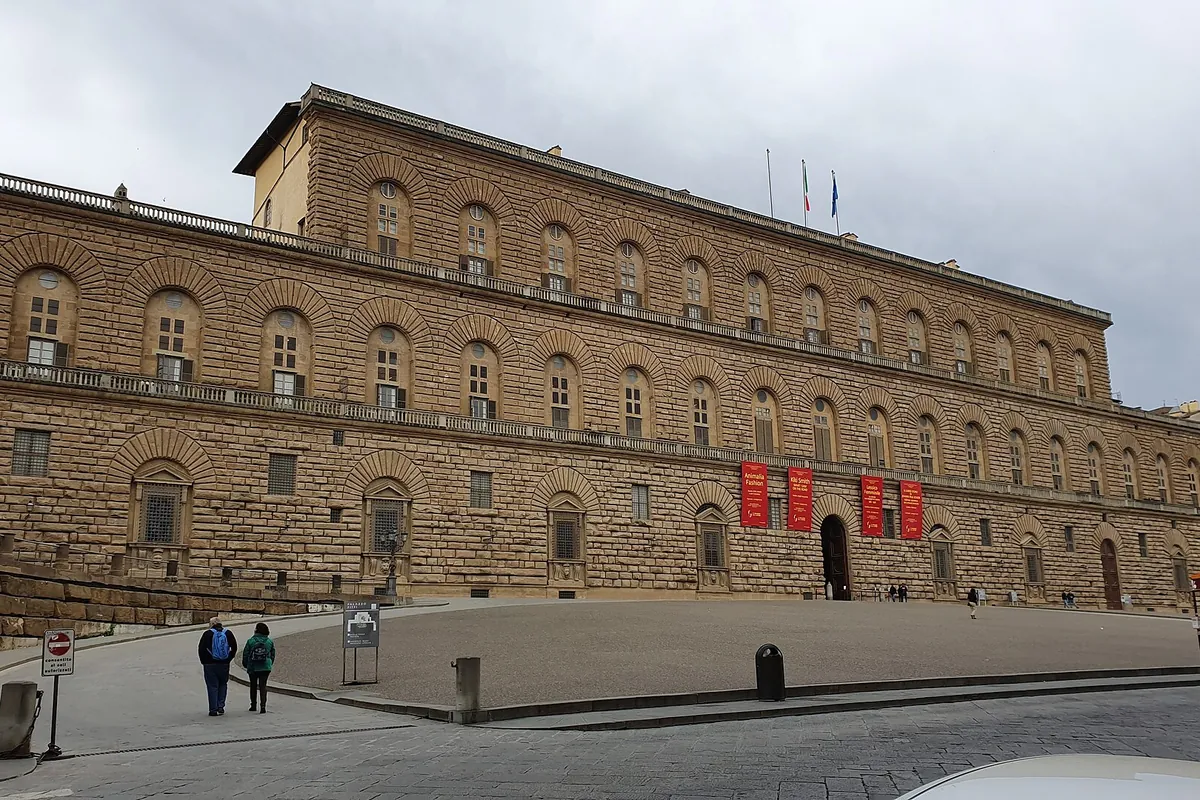
Euridice was first performed on 6 October 1600 at Palazzo Pitti, for the wedding of Henry IV of France and Maria de' Medici. Peri sang the role of Orfeo, and the libretto by Rinuccini drew on books X and XI of Ovid's Metamorphoses. Caccini wrote his own Euridice on the same text, published it in 1600 before Peri's version and staged it in 1602. Palazzo Pitti stands on the south side of the Arno, the same bank as the Oltrarno. A banker, Luca Pitti, commissioned it in 1458, and Eleonora di Toledo bought it for the Medici in 1549.
Singing the words
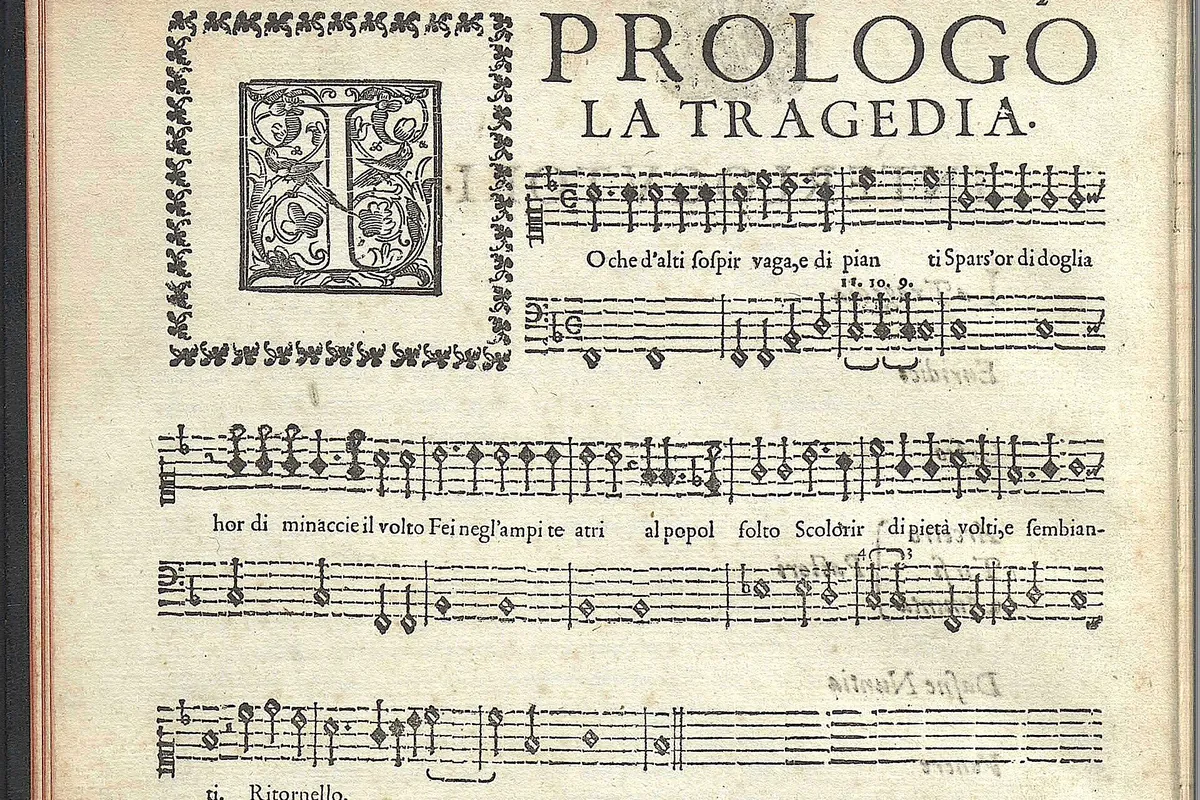
The Camerata's experiments produced monody, which the Wikipedia article on Caccini describes as an emotionally affective solo vocal line over simple chordal accompaniment. It developed into the stile recitativo, the speech-like singing that carries a plot. Caccini published a collection of monodies and songs for solo voice and continuo, Le nuove musiche, in 1602. An aria is the lyrical counterpart: a self-contained piece for one voice, often with ornament, in which the plot pauses and the feeling opens up. A recital of arias with a piano, as at Santa Monaca, is therefore a modern cousin of those early experiments, in spirit if not in notes.
From Florence outward
Opera did not stay in Florence. Claudio Monteverdi's L'Orfeo, composed for the Gonzaga court in Mantua in 1607, is the first opera still regularly performed. The form then spread across Europe in the 17th century. Florence kept its own musical life, and the Maggio Musicale Fiorentino festival, founded in 1933, and the opera house that opened in 2011 are its present-day expression. The first operas belonged to the Medici court, so a small room with a voice and a keyboard is a fair way to approach them.
What it means for an evening at Santa Monaca
Nothing at the church links it to Peri or Caccini; the link is the city. The Oltrarno, where the church stands, lies on the same bank as Palazzo Pitti. The room's wooden choir and organ date from the 17th century, the century after the first operas. So the sensible way to use this history is as background for the hour of music, not as a claim about the church. Arrive knowing that the form grew from experiments in this city, and that a solo voice with simple accompaniment was where the experiments started.
Frequently asked questions
Was the first opera performed in Florence?
Dafne, written around 1597 and produced in 1598, is regarded as the first opera, but its score is lost. Euridice, performed on 6 October 1600 at Palazzo Pitti, is the oldest surviving opera.
Who was the Camerata?
A group of Florentine humanists, first recorded meeting on 14 January 1573, who wanted to revive ancient Greek drama with sung text.
Is the Santa Monaca church linked to the first operas?
No. The link is the city: Palazzo Pitti, where Euridice was performed, is on the same bank of the Arno.
Sources